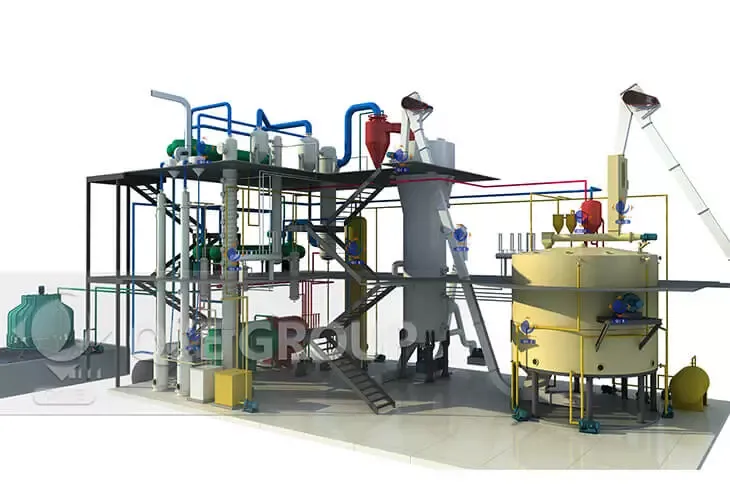
2024 Rapeseed Oil Processing: International Certification Standards & Equipment Compliance This article comprehensively analyzes the latest international certification standards and equipment compliance requirements for the rapeseed oil processing industry in 2024. It focuses on the key performance indicators and operational convenience for B2B enterprises when purchasing two core production lines: cold - pressing and solvent extraction. The article elaborates on the applicable scenarios and advantages of the two technologies, emphasizing the significance of international certifications such as ISO in ensuring equipment safety, hygiene, and product quality. It also deeply analyzes how modern automated control systems improve production efficiency and reduce human - induced risks. This guide aims to provide a scientific basis for procurement decision - makers and technical evaluation experts, helping enterprises achieve efficient production and enhance market competitiveness to meet the current industry development needs. Learn More 2026/02/03
ISO Certified Canola Oil Processing Equipment for Export | Quality & Safety Guide This industry research explores the critical role of international standards—particularly ISO certifications—in guaranteeing product quality, safety, and compliance in canola oil processing equipment. It compares cold-press and solvent extraction methods, analyzes key performance indicators, and highlights how modern automation systems enhance efficiency and reduce human error. Designed for B2B procurement decision-makers, this guide supports informed equipment selection based on production scale, regulatory alignment, and long-term operational excellence. Supported by technical data, reference standards, and real-world applications, it empowers manufacturers to meet global market demands reliably. Learn More 2026/01/28
ISO Certification Impact on Rapeseed Oil Processing Equipment Safety, Compliance & Export Readiness How can rapeseed oil processing equipment balance efficient production with quality assurance? This article offers an in-depth analysis of the fundamental differences between cold-pressing and solvent extraction methods, highlighting the critical role of ISO international certification standards in guaranteeing equipment safety, hygiene, and export compliance. Featuring a case study of the advanced production lines by QIE Group, this research provides B2B procurement decision-makers with a scientific guide for equipment selection, helping to enhance product competitiveness and build market trust. Learn More 2026/01/24
Comprehensive Comparative Analysis of Solvent Extraction and Traditional Cold Pressing in Rapeseed Oil Production This article delves into the application and advantages of solvent extraction technology in rapeseed oil production, conducting a comprehensive comparison with traditional cold - pressing methods. It details solvent selection, safe operation, solvent recovery processes, and their roles in enhancing oil extraction rate and product purity. The article also explores solutions to common problems and optimization strategies in the production process through real - world cases, emphasizing the protection of nutritional value and the improvement of product quality. It aims to assist technicians and procurement decision - makers in accurately evaluating the applicability of the two extraction processes, thereby enhancing production efficiency, safety, and environmental protection levels. Meanwhile, the product advantages of QIE Group rapeseed oil production lines and a clear call - to - action (CTA) are subtly integrated, facilitating potential customers to quickly obtain professional information and convert into customers. Learn More 2026/01/18
Comparative Analysis and Application Suggestions of Solvent Extraction and Traditional Cold Pressing in Rapeseed Oil Production - Industry Research In rapeseed oil production, solvent extraction and traditional cold pressing each have their own advantages. This article conducts an in - depth comparison of the extraction efficiency, nutrient retention ability, and operational safety of the two processes. It analyzes how solvent extraction improves the oil yield and purity through a scientific process while ensuring food safety and environmental compliance. By combining industry practical cases, it helps B2B procurement decision - makers accurately select the most suitable oil production line technology solution for their own needs, enabling enterprises to achieve efficient, stable, and high - quality oil production. Learn More 2026/01/13
Cold Pressing vs Solvent Extraction for Canola Oil | Export Standards & Efficiency Guide This article compares cold pressing and solvent extraction methods in canola oil production, focusing on extraction efficiency, purity, and compliance with international export standards. It highlights solvent extraction’s superior yield (up to 95% vs 70–80% for cold pressing), enhanced oil quality, and ability to meet global certifications like ISO 22000 and HACCP. Supported by industry data and case studies, the analysis provides actionable insights for producers seeking competitive advantage in global markets. Learn how optimized solvent systems, safe recovery processes, and environmental controls ensure both profitability and sustainability—key factors for exporters. Learn More 2026/01/08