You’re not just making oil—you're building trust with buyers who demand purity, consistency, and value. If your small sesame oil factory is stuck at 45–50% extraction efficiency or struggling with inconsistent flavor, it’s time to rethink how moisture, temperature, and equipment work together.
Many small processors overlook one critical factor: raw material moisture content. For sesame seeds, optimal drying should bring moisture down to 6–8%. Go below that, and you lose yield due to brittleness; go above, and you risk microbial growth during storage—and lower oil quality. One client in Gujarat saw a 12% increase in output simply by adjusting their drying cycle from 6 hours to 4.5 using a low-temperature drum dryer.
| Process Step | Cold Press vs Hot Press |
|---|---|
| Oil Yield | Cold: ~42% | Hot: ~55% |
| Flavor Retention | Cold: High (nutty, fresh) | Hot: Lower (roasty) |
| Energy Use per kg | Cold: 0.8 kWh/kg | Hot: 1.3 kWh/kg |
| Best For | Premium markets (EU, US) | Bulk export / cooking oil |
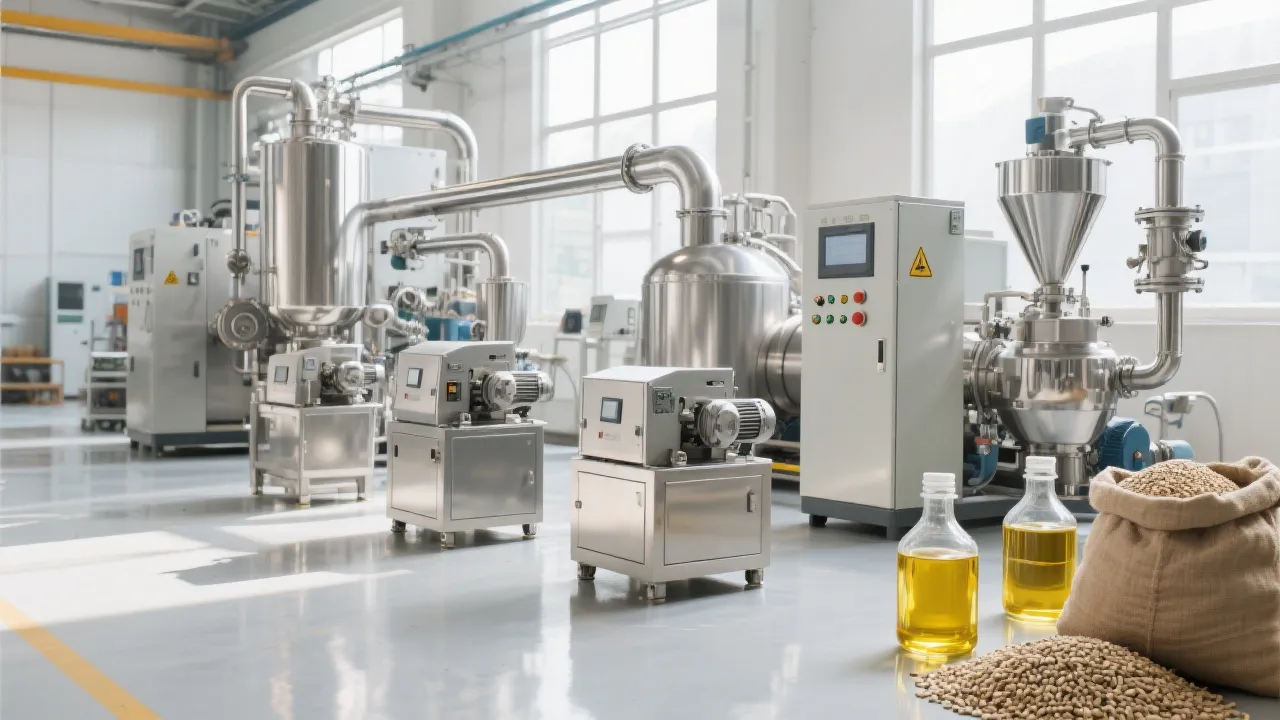
If you're running under 500 kg/day, avoid over-engineering. A compact screw press (like our 300W model) paired with a dual-stage filtration system can deliver clean, sediment-free oil without breaking the bank. These systems reduce manual labor by up to 60% and cut downtime through self-cleaning filters—ideal for factories where staff turnover is high.
We’ve helped over 100 small sesame oil producers transition from manual to semi-automated lines. The average ROI? Just 8 months. Now it’s your turn to stop guessing—and start scaling smartly.
Pro Tip: Run weekly maintenance checks on your filter membranes and adjust pressure settings based on seed batch variation. This simple step cuts rework rates by nearly 30%—and keeps your product tasting consistent every single time.
A family-run mill in Nigeria used our recommended setup—including pre-drying control and cold press optimization—and boosted production from 120 kg/day to 156 kg/day within two weeks. Their energy costs dropped 20%, and they secured contracts with premium retailers in Dubai and London.